

What are the disadvantages of the 304 Deep Soup Pot?
As a supplier of the 304 Deep Soup Pot, I've had the opportunity to interact closely with this product and understand both its strengths and limitations. While the 304 Deep Soup Pot offers numerous advantages, it's important to be transparent about its disadvantages as well. This blog post aims to provide an in - depth analysis of the drawbacks associated with the 304 Deep Soup Pot, allowing potential customers to make informed decisions.
1. High Initial Cost
One of the most significant disadvantages of the 304 Deep Soup Pot is its relatively high initial cost. The 304 stainless steel used in the pot is of high quality, which contributes to its durability and resistance to corrosion. However, this quality comes at a price. Compared to pots made from other materials such as aluminum or enamel - coated steel, the 304 Deep Soup Pot can be considerably more expensive.
For small businesses or individuals on a tight budget, this upfront cost can be a deterrent. They may opt for cheaper alternatives that can perform similar functions in the short - term, even if they lack the long - term durability of the 304 stainless steel pot. For example, an aluminum soup pot might cost half as much as a 304 Deep Soup Pot, making it a more attractive option for those looking to save money initially. You can check out a Soup Pot Set on our website to compare prices and features.
2. Heat Distribution
Although 304 stainless steel is a popular material for cookware, it has a relatively low thermal conductivity. This means that the 304 Deep Soup Pot may not distribute heat as evenly as some other types of pots. When cooking soup or other liquids in the pot, you may notice that the heat is concentrated in certain areas, leading to uneven cooking.
For instance, the bottom of the pot may get very hot while the sides remain cooler. This can result in some parts of the soup being overcooked or burnt, while other parts are undercooked. To mitigate this issue, some manufacturers may use multi - layer construction or add an aluminum or copper core to the bottom of the pot to improve heat distribution. However, these features can further increase the cost of the pot. If you're interested in learning more about our 304 Deep Soup Pot, you can visit our website.
3. Heavy Weight
The 304 Deep Soup Pot is typically heavier than pots made from other materials. The density of 304 stainless steel contributes to its weight, which can be a problem for some users. For example, if you have limited upper - body strength or if you need to move the pot frequently during cooking, the heavy weight can make it difficult to handle.
This can also be an issue when storing the pot. A heavy pot may be more difficult to lift onto a high shelf or to move around in a crowded cabinet. Additionally, if you're using the pot on a stovetop with a lower weight capacity, the heavy pot may put extra stress on the burner and potentially cause damage.
4. Prone to Scratching
While 304 stainless steel is generally durable, it is prone to scratching. During normal use, utensils such as metal spoons or forks can leave scratches on the surface of the pot. These scratches not only affect the appearance of the pot but can also create areas where bacteria can accumulate.
Scratches can also make the pot more difficult to clean, as food particles may get trapped in the scratched areas. To prevent scratching, users need to be careful when using utensils in the pot and should avoid using abrasive cleaning materials. However, even with proper care, some scratching is inevitable over time.
5. Limited Compatibility with Induction Stoves
Not all 304 Deep Soup Pots are compatible with induction stoves. Induction stoves work by creating a magnetic field that heats the cookware directly. For a pot to be compatible with an induction stove, it needs to be made of a magnetic material.
While 304 stainless steel has some magnetic properties, it may not be magnetic enough for some induction stoves. If you're planning to use the pot on an induction stove, you need to make sure that it is specifically labeled as induction - compatible. Otherwise, you may end up with a pot that doesn't work on your stove, which can be frustrating and wasteful. You can explore our Thick Stainless Steel Non - stick Spicy Hot Pot to see if it meets your induction stove requirements.
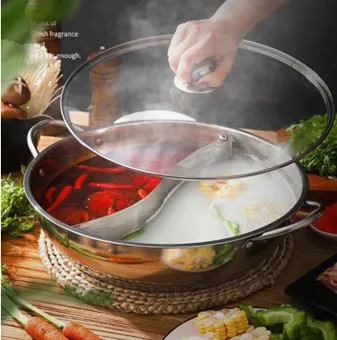

6. Difficult to Clean Grease and Stains
Cleaning the 304 Deep Soup Pot can be a challenge, especially when dealing with stubborn grease and stains. The smooth surface of the stainless steel can make it difficult for cleaning agents to adhere to the dirt, and scrubbing too hard can cause scratching.
For example, if you've cooked a rich, oily soup in the pot, the grease can leave a residue that is hard to remove. You may need to use special cleaning products or techniques to get the pot completely clean. This can be time - consuming and may require additional effort compared to cleaning pots made from other materials.
Conclusion
Despite these disadvantages, the 304 Deep Soup Pot still has many redeeming qualities. Its durability, resistance to corrosion, and overall quality make it a popular choice for many consumers. However, it's important to be aware of the potential drawbacks before making a purchase.
If you're interested in learning more about our products or have any questions regarding the 304 Deep Soup Pot, we encourage you to reach out to us for a procurement discussion. We're committed to providing you with the best information and helping you find the cookware that suits your needs.
References
- "Cookware Materials and Their Properties" - Journal of Kitchenware Science
- "Stainless Steel in Cookware: Advantages and Disadvantages" - International Journal of Cookware Technology