

Can an induction hot pot be used for making hot pot with a pot made of a special material?
Can an induction hot pot be used for making hot pot with a pot made of a special material?
As a supplier of Induction Hot Pots, I've encountered numerous inquiries from customers regarding the compatibility of induction hot pots with pots made of special materials. In this blog, I'll delve into this topic to provide you with a comprehensive understanding.
Induction hot pots operate on the principle of electromagnetic induction. When an alternating current passes through the induction coil beneath the hot - pot surface, it generates a changing magnetic field. This magnetic field then induces an electric current (eddy current) in the pot placed on the hot pot. The resistance of the pot to this eddy current causes it to heat up, which is how the cooking process occurs.
The key factor for a pot to be used with an induction hot pot is its magnetic permeability. Materials that are ferromagnetic, such as iron and some types of stainless steel, are highly suitable for induction cooking. Ferromagnetic materials have the ability to be strongly magnetized by an external magnetic field, which is essential for the efficient generation of eddy currents and subsequent heating.
Let's first consider the most common materials used for hot - pot cooking and their compatibility with induction hot pots.
Stainless steel is a popular choice for hot - pot pots. Among stainless steels, those with a high iron content, like 430 stainless steel, are ferromagnetic and work well with induction hot pots. However, some austenitic stainless steels, such as 304 stainless steel, are generally non - ferromagnetic in their normal state. But there are specially treated 304 stainless steel pots that have been made magnetic. For example, our 304 Deep Soup Pot is a product that has been engineered to be compatible with induction hot pots. Through special manufacturing processes, the magnetic properties of the 304 stainless steel have been enhanced, allowing it to heat up efficiently on an induction hot pot.
Cast iron is another excellent material for hot - pot cooking on an induction hot pot. Cast iron is highly ferromagnetic, which means it can quickly absorb the magnetic energy from the induction field and convert it into heat. Cast - iron pots also have good heat - retention properties, which is beneficial for keeping the hot - pot broth at a consistent temperature during the cooking process.
Now, let's talk about some special materials. Copper and aluminum are not ferromagnetic materials. By themselves, copper and aluminum pots cannot be used directly on an induction hot pot because they do not generate eddy currents in the presence of an induction magnetic field. However, there are composite pots available in the market. These composite pots usually have a ferromagnetic layer, such as a layer of stainless steel or iron, on the bottom. This ferromagnetic layer allows the pot to interact with the induction field and heat up, while the outer layer of copper or aluminum can provide other advantages, like excellent heat conductivity or a beautiful appearance.
Ceramic pots are also a unique option. Traditional ceramic materials are non - magnetic and thus not suitable for direct use on an induction hot pot. But some modern ceramic pots are designed with a magnetic base. These pots combine the aesthetic appeal and heat - distribution properties of ceramic with the functionality of induction cooking.

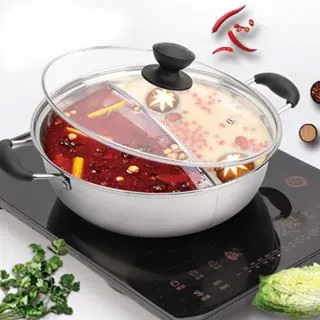
Our Induction Hot Pot is designed to be highly versatile. It can work with a wide range of ferromagnetic pots, providing you with the flexibility to choose the pot that best suits your cooking needs. Whether you prefer the durability of stainless steel, the heat - retention of cast iron, or the unique properties of composite pots, our induction hot pot can handle them all.
For seafood lovers, our Stainless Steel Seafood Hot Pot is a great choice. Made of high - quality stainless steel that is compatible with induction cooking, it allows you to enjoy a delicious seafood hot pot with ease. The stainless - steel material is resistant to corrosion, which is especially important when cooking with seafood and its often acidic broths.
In conclusion, while not all materials can be used directly with an induction hot pot, there are many options available. Through technological advancements and innovative manufacturing processes, pots made of various materials can be made compatible with induction cooking. Whether you are a home cook looking to enjoy a hot pot with your family or a restaurant owner in need of reliable cooking equipment, our induction hot pots and a variety of compatible pots can meet your requirements.
If you are interested in our products and want to discuss procurement details, please feel free to reach out. We are more than happy to provide you with detailed product information, pricing, and any other support you may need.
References
- "Principles of Induction Cooking" - A technical guide on the working mechanism of induction cooking.
- "Materials for Cookware" - A study on different materials used in cookware and their properties.