

What materials are used to make a stainless ice bucket?
Hey there! As a supplier of Stainless Ice Buckets, I often get asked about what materials are used to make these nifty items. So, I thought I'd take a few minutes to break it all down for you.
First off, let's talk about the star of the show - stainless steel. Stainless ice buckets are, as the name suggests, primarily made from stainless steel. But what exactly is stainless steel? Well, it's an alloy, which means it's a mixture of different metals. The main components of stainless steel are iron, chromium, and nickel.
Iron is the base metal. It gives the stainless steel its strength and structure. Chromium is what makes stainless steel "stainless." When chromium is exposed to oxygen, it forms a thin, invisible layer of chromium oxide on the surface of the steel. This layer acts as a protective barrier, preventing the iron from rusting and corroding. Most stainless steels used in ice buckets contain at least 10.5% chromium.
Nickel is another important element in stainless steel. It enhances the corrosion resistance of the steel, especially in environments where there's a lot of moisture or salt. It also gives the steel a nice, shiny finish, which is why stainless ice buckets look so sleek and modern. The amount of nickel in stainless steel can vary, but for high - quality ice buckets, you'll often find around 8 - 10% nickel.
There are different grades of stainless steel, and the grade used in ice buckets depends on a few factors, like the intended use and the price point. For example, 304 stainless steel is a very common grade used in food - grade applications, including ice buckets. It's durable, corrosion - resistant, and relatively affordable. On the other hand, 316 stainless steel is even more corrosion - resistant, thanks to the addition of molybdenum. It's often used in more high - end or commercial ice buckets, especially those that might be exposed to harsh chemicals or saltwater.
Now, besides the main stainless steel body, there are a few other materials that might be used in the construction of a stainless ice bucket.
Some ice buckets have handles, and these can be made from a variety of materials. One common option is plastic. Plastic handles are lightweight, inexpensive, and easy to mold into different shapes. They can also be colored to match the overall design of the ice bucket. Another option is wood. Wooden handles give the ice bucket a more rustic, natural look. They're usually made from hardwoods like oak or maple, which are strong and durable.
The lining of the ice bucket is also an important consideration. Some ice buckets have a plastic or rubber lining. This lining helps to keep the ice from melting too quickly by providing an extra layer of insulation. It also protects the stainless steel interior from scratches and dents.
In addition to these materials, there might be some small components like rivets or screws used to hold the different parts of the ice bucket together. These are typically made from stainless steel or brass, which are both strong and corrosion - resistant.
When it comes to choosing a stainless ice bucket, it's important to consider the quality of the materials. A well - made ice bucket with high - quality stainless steel and good - quality additional components will last longer and perform better.
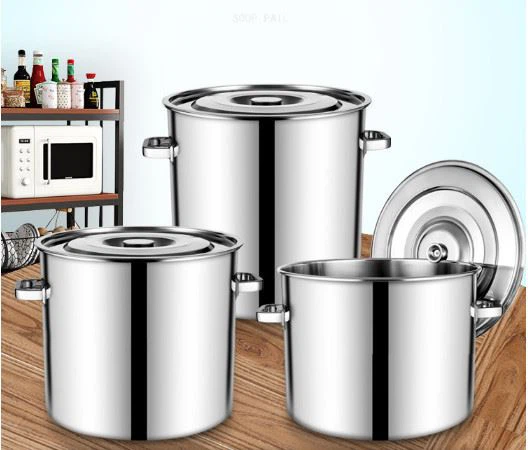
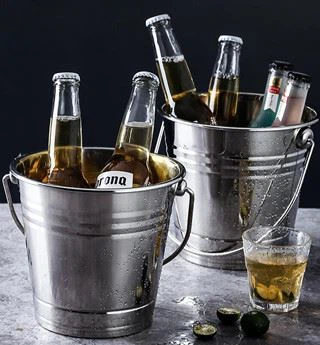
If you're in the market for a stainless ice bucket, we've got a great selection. Check out our Stainless Ice Bucket on our website. We also have other great products like the Large Capacity Soup Bucket Beer Brewing Pot and the Deep Thickening Barrel Soup Barrel Pot.
Whether you're hosting a party, running a bar, or just want to keep your drinks cold at home, a good stainless ice bucket is a must - have. And if you're interested in purchasing in bulk or have any questions about our products, we'd love to hear from you. Just reach out to us, and we can start a conversation about your needs. We're here to help you find the perfect ice bucket for your situation.
References
- "Stainless Steel: Properties, Production, and Applications." ASM International Handbook Committee.
- "Materials Science and Engineering: An Introduction." William D. Callister Jr. and David G. Rethwisch.