

What materials are food shopping carts usually made of?
Hey there! As a supplier of food shopping carts, I often get asked about the materials these carts are usually made of. So, I thought I'd take a moment to break it down for you.
Steel
One of the most common materials for food shopping carts is steel. Steel is incredibly durable. It can withstand a lot of wear and tear, which is crucial considering how often these carts are used in busy grocery stores. They're pushed around the aisles, bumped into shelves (accidentally, of course), and carried all sorts of heavy loads. Steel can handle it all.
It's also strong enough to support a decent amount of weight. You know how you sometimes load up your cart with bags of rice, gallons of milk, and big packs of toilet paper? Well, steel carts can hold all that without bending or breaking easily.
Another advantage of steel is its resistance to corrosion. Most steel shopping carts are coated to protect them from rust, especially if they're used in areas where they might get wet, like near the produce section or in outdoor markets.
However, steel carts can be a bit heavy. This might make them a bit more difficult to maneuver, especially for people who aren't as strong. But manufacturers are always working on ways to make them lighter without sacrificing strength. For example, some steel carts now use thinner but high - strength steel alloys.
Aluminum
Aluminum is another popular choice for food shopping carts. One of the biggest selling points of aluminum is its light weight. Compared to steel, aluminum carts are much easier to push around. This is great for both shoppers and store employees who have to move a lot of carts around the store.
Aluminum is also resistant to corrosion. It forms a natural oxide layer on its surface, which protects it from rust and other forms of corrosion. This means that aluminum carts can last a long time, even in damp or humid environments.
In addition, aluminum is a very malleable material. This allows manufacturers to create carts with more complex and ergonomic designs. They can shape the aluminum into curves and angles that make the cart more comfortable to hold and easier to use.
But there are some downsides to aluminum. It's not as strong as steel. So, if a cart is going to be used to carry extremely heavy loads on a regular basis, an aluminum cart might not be the best choice. Also, aluminum can be more expensive than steel, which might increase the cost of the cart.
Plastic
Plastic is becoming increasingly common in food shopping cart construction. There are several types of plastics used, such as polyethylene and polypropylene.
Plastic carts are extremely lightweight. They're easy for anyone to push, even children or the elderly. This makes them very user - friendly.
They're also very easy to clean. You can just hose them down or wipe them with a damp cloth, which is important in a food - shopping environment where hygiene is crucial.
Plastic is also a very versatile material. It can be molded into all sorts of shapes and colors. This allows stores to customize their carts to match their brand image. For example, a store might choose to have bright - colored plastic carts to make their store stand out.
However, plastic carts are not as strong as steel or aluminum. They can crack or break if they're subjected to a lot of force, like being hit hard against a wall or dropped from a height. Also, over time, plastic can become brittle, especially if it's exposed to sunlight or extreme temperatures.
Hybrid Materials
Some food shopping carts use a combination of materials. For example, a cart might have a steel frame for strength and plastic or aluminum components for other parts, like the handle or the basket.
This hybrid approach allows manufacturers to take advantage of the best properties of each material. The steel frame provides the necessary strength to support the weight of the groceries, while the plastic or aluminum parts make the cart lighter and more comfortable to use.
Specialized Shopping Carts
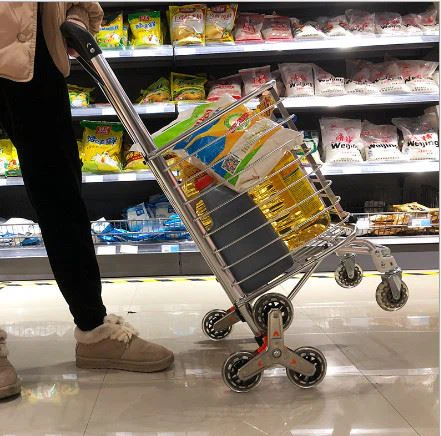
There are also some specialized food shopping carts that are made with unique materials or have special features. For example, the 8 Wheels Shopping Cart is designed for better maneuverability. The extra wheels can distribute the weight more evenly and make it easier to turn the cart in tight spaces.
The Stair Climbing Shopping Cart With Folding Handle is a great option for people who live in multi - level buildings. It's usually made with a combination of lightweight and strong materials to make it easy to carry up and down stairs.
The Compact Folding Portable Cart Saves Space Food Shopping Cart is perfect for people who don't have a lot of storage space. These carts are often made with lightweight materials like aluminum or plastic so that they can be easily folded up and stored away when not in use.
Conclusion
So, as you can see, there are several materials commonly used to make food shopping carts, each with its own advantages and disadvantages. Steel offers durability and strength, aluminum provides light weight and corrosion resistance, plastic is lightweight and easy to clean, and hybrid materials combine the best of different worlds.
If you're in the market for food shopping carts for your store or business, it's important to consider your specific needs. Think about the types of products you'll be selling, the volume of customers, and the environment in which the carts will be used.
If you have any questions about our food shopping carts or want to discuss your specific requirements, feel free to reach out. We're always happy to help you find the perfect shopping carts for your needs. Whether you need a large quantity of standard carts or some specialized ones, we've got you covered. Let's start a conversation and see how we can work together to meet your shopping cart needs.

References
- "Materials Science for Engineers" by Donald Askeland
- Industry reports on shopping cart manufacturing and materials