

What is the load - distribution design of a food shopping cart?
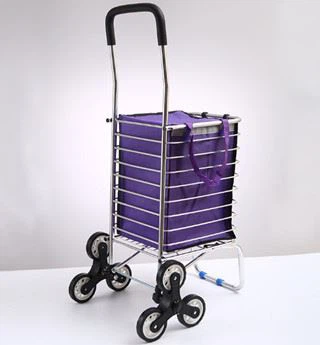
Load distribution design is a crucial aspect of food shopping cart development, directly influencing the cart's functionality, durability, and user experience. As a leading provider of food shopping carts, we deeply understand the importance of this design principle and have successfully integrated it into our product lines, including the Aluminium Alloy Shopping Cart with Oxford Cloth Bag, Stair Climbing Shopping Cart With Folding Handle, and 8 Wheels Shopping Cart.
The Significance of Load Distribution in Food Shopping Carts
When customers visit a grocery store, they expect to be able to load their chosen food items into a shopping cart conveniently and safely. The load distribution design of a shopping cart determines how evenly the weight of these items is spread across the cart's structure. A well - designed load distribution system ensures that the cart remains stable during movement, reducing the risk of tipping over and protecting both the products and the users.
For instance, in a supermarket, customers may place heavy items such as large bottles of beverages or bags of rice at the bottom of the cart. If the cart's design does not account for this uneven weight placement, it can become top - heavy and difficult to maneuver. This not only causes inconvenience to the shoppers but also poses a safety hazard in a busy store environment.
Key Elements of Load - Distribution Design
Frame Structure
The frame of a food shopping cart serves as the backbone that supports the entire load. We use high - quality materials in our frame construction to ensure sufficient strength and rigidity. For example, the frame of our Aluminium Alloy Shopping Cart with Oxford Cloth Bag is made of aluminium alloy, which offers a good balance between lightness and strength.
The shape and design of the frame also play a vital role in load distribution. A well - engineered frame will have cross - braces and reinforcements in strategic locations to evenly disperse the weight. This helps prevent any single part of the frame from bearing an excessive amount of stress, which could lead to structural failure over time.
Wheel Placement
The placement of wheels is another critical factor in load distribution. Our 8 Wheels Shopping Cart is a prime example of how wheel design can enhance load - sharing. With eight wheels, the weight of the cart and its contents is distributed over a larger area, reducing the pressure on each individual wheel.
Proper wheel spacing also ensures that the cart remains stable when turning or moving on uneven surfaces. The wheels are typically positioned at the corners and along the sides of the cart to provide maximum support and balance. This design allows the cart to handle a wide range of loads without compromising its maneuverability.
Compartment Design
The compartments within a food shopping cart are designed to organize the items and contribute to load distribution. In our carts, we have different sized compartments to accommodate various types of food products. For example, there are smaller compartments for delicate items like eggs or bread, and larger ones for bulkier items.
By separating and organizing the products in this way, the weight is more evenly distributed throughout the cart. Additionally, some of our carts have adjustable compartments, allowing customers to customize the space according to their specific shopping needs. This flexibility helps ensure that the load is always distributed in the most efficient manner.

Testing and Optimization
To ensure the effectiveness of our load - distribution design, we conduct rigorous testing on all our food shopping carts. We simulate different loading scenarios, including placing heavy items in various positions and moving the carts over different types of surfaces.
During these tests, we measure key parameters such as stability, wheel pressure, and frame stress. Based on the test results, we make necessary adjustments to the design. For example, if we find that a particular area of the frame is experiencing excessive stress, we may add additional reinforcements or modify the shape of the frame in that area.
User - Centric Design
Our load - distribution design is also centered around the user experience. We understand that customers want a shopping cart that is easy to push, pull, and turn. A well - distributed load makes the cart more maneuverable, reducing the physical effort required by the shoppers.
For example, our Stair Climbing Shopping Cart With Folding Handle is designed with the needs of users in mind. The load - distribution system allows the cart to be easily carried up and down stairs while maintaining stability. The folding handle also adds to the convenience, making it easier to store the cart when not in use.
Advantages of Our Load - Distribution Design
Our advanced load - distribution design offers several advantages to both retailers and customers. For retailers, it means fewer damaged products due to cart tipping or structural failures. This reduces costs associated with product replacement and customer compensation.
Customers benefit from a safer and more comfortable shopping experience. They can focus on selecting their food items without having to worry about the cart's stability. Our carts' load - distribution design also helps prevent back and muscle strain that can result from struggling with an unbalanced cart.
Contact Us for Purchase and Negotiation
If you are interested in our food shopping carts with excellent load - distribution design, we invite you to contact us for purchase and negotiation. Our team of experts is ready to provide you with detailed product information, customized solutions, and competitive pricing. We are committed to meeting your specific requirements and ensuring your satisfaction with our products.
References
- "Engineering Principles for Shopping Cart Design" - Journal of Retail Equipment Design
- "Load Distribution Analysis in Mobility Equipment" - International Journal of Mechanical Engineering Research