

How to prevent food from spilling in a lunch box?
Food spillage in lunch boxes can be a frustrating and messy problem. As a lunch box supplier, I understand the importance of providing solutions that keep your meals intact and your day hassle - free. In this blog, I'll share some effective strategies to prevent food from spilling in a lunch box, along with some of our top - selling products that are designed with spill - prevention in mind.
Choose the Right Lunch Box
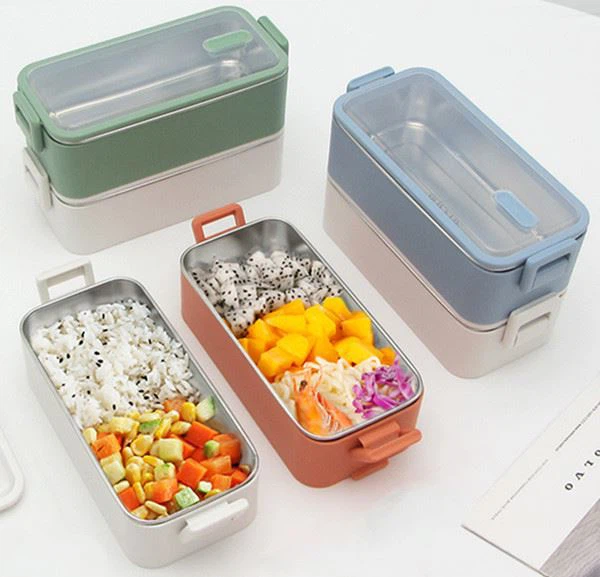
The first step in preventing food spillage is to select a lunch box that is well - designed for the task. Our Double Layer Compartment Bento Lunch Box is an excellent choice. It features multiple compartments, which help to separate different types of food. This separation not only prevents mixing but also reduces the chances of liquid - based foods spilling onto dry items. The tight - fitting lid ensures that the contents stay inside the box, even if it's jostled around during transit.
Another great option is the Stainless Steel Tiffin Storage Box. Made from high - quality stainless steel, this lunch box is durable and has a secure locking mechanism. The individual tiers can be used to store different foods, and the airtight seal keeps liquids from leaking out. The robust construction of the stainless steel also means that it can withstand some rough handling without breaking or deforming.

Proper Food Placement
Once you've chosen the right lunch box, how you place your food inside matters. Start by putting heavier and more solid foods at the bottom. For example, if you're packing a sandwich, a piece of fruit, and some yogurt, place the sandwich at the base of the lunch box. The weight of the sandwich will help to stabilize the box and prevent it from tipping over easily.
Liquids should be placed in containers with tight - fitting lids. If you're packing soup or a drink, use a thermos or a sealed bottle. Our Heat Preservation Water Injection Childrens Bowl is a great option for keeping hot or cold liquids secure. It has a double - walled design for heat preservation and a leak - proof lid.
For foods that tend to be messy, like sauces or dressings, use small, sealed containers. You can place these containers in a corner of the lunch box or in a dedicated compartment if your lunch box has one. This way, even if there is a small spill inside the container, it won't spread to other foods.
Seal and Secure
Before you close the lunch box, make sure all containers are properly sealed. Check that the lids of your food containers are screwed on tightly or snapped shut. For the lunch box itself, ensure that the lid is fully closed and latched. If your lunch box has a locking mechanism, engage it to provide an extra layer of security.
Some lunch boxes come with additional features to enhance the seal. For example, some have rubber gaskets around the lid that create an airtight and watertight seal. This can be especially useful for preventing spills, as it stops any liquid from seeping out through the edges of the lid.
Consider the Shape and Size
The shape and size of the lunch box can also affect spillage. A square or rectangular lunch box is generally more stable than a round one, as it has flat sides that can rest evenly on a surface. This reduces the risk of the lunch box rolling over and causing a spill.
In terms of size, choose a lunch box that is appropriate for the amount of food you're packing. If the lunch box is too large, the food may shift around more during transit, increasing the chances of spillage. On the other hand, if it's too small, you may have to force the food in, which can also lead to spills.
Use Protective Liners
Using protective liners inside the lunch box can be a smart move. You can use disposable paper liners or reusable silicone liners. These liners can catch any small spills and make cleaning the lunch box much easier. If there is a spill, you can simply remove the liner and dispose of it or wash it, rather than having to scrub the entire lunch box.
Transportation Tips
How you transport your lunch box can also impact spillage. If you're carrying it in a backpack, make sure it's placed in an upright position. Avoid overstuffing the backpack, as this can put pressure on the lunch box and cause it to open or spill.
If you're using a lunch bag, choose one with a padded interior. The padding can help to absorb any shocks or vibrations during transit, reducing the risk of spills. You can also place the lunch box in a separate compartment of the lunch bag to keep it stable.
Maintenance and Inspection
Regular maintenance and inspection of your lunch box are essential for preventing spills. Check the lunch box for any signs of wear and tear, such as cracks in the plastic or a loose locking mechanism. If you notice any problems, replace the lunch box or the faulty parts as soon as possible.
Clean your lunch box thoroughly after each use. This not only keeps it hygienic but also helps to maintain the integrity of the seals and lids. Make sure to dry the lunch box completely before using it again, as moisture can weaken the seals and lead to spills.
Conclusion
Preventing food from spilling in a lunch box requires a combination of choosing the right lunch box, proper food placement, secure sealing, and careful transportation. As a lunch box supplier, we offer a range of high - quality products, such as the Double Layer Compartment Bento Lunch Box, Stainless Steel Tiffin Storage Box, and Heat Preservation Water Injection Childrens Bowl, that are designed to keep your food safe and spill - free.
If you're interested in purchasing our products for your personal use, for your business, or for any other purpose, we invite you to contact us for procurement and negotiation. We are committed to providing you with the best lunch box solutions to meet your needs.
References
- "Food Packaging and Preservation" - A general reference on food storage and packaging principles.
- "Lunch Box Design and Functionality" - Research on the features of lunch boxes that contribute to spill - prevention.