

How do the 6 wheels distribute the weight in a shopping cart?
When it comes to shopping carts, the distribution of weight across the wheels is a crucial aspect that affects the cart's stability, maneuverability, and overall performance. As a supplier of 6 wheels shopping carts, I've delved deep into the science behind how these six wheels work together to distribute weight effectively. In this blog post, I'll share my insights on this topic, providing a comprehensive understanding of the weight - distribution mechanism in 6 wheels shopping carts.
The Basics of Weight Distribution in Shopping Carts
Before we focus on 6 wheels shopping carts specifically, it's important to understand the general principles of weight distribution in shopping carts. The weight placed inside a shopping cart can vary greatly, from a few light items to a large quantity of heavy groceries. The wheels' main function is to support this weight and allow the cart to move smoothly.
The ideal weight - distribution scenario aims to balance the load evenly across all wheels. This balance helps prevent excessive wear on individual wheels, reduces the force required to push or pull the cart, and enhances the cart's stability during movement. If the weight is unevenly distributed, it can lead to issues such as difficulty in steering, increased risk of tipping over, and premature wheel damage.
How 6 Wheels Facilitate Weight Distribution
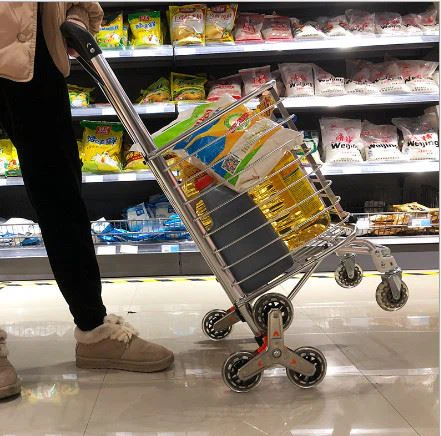
A 6 - wheel shopping cart has a more complex weight - distribution system compared to a traditional 4 - wheel cart. The additional two wheels provide more contact points with the ground, which can better handle the load.
Front and Rear Wheels Configuration
Typically, in a 6 - wheel shopping cart, the wheels are arranged in a configuration where there are two front wheels, two middle wheels, and two rear wheels. The front wheels are often smaller and more maneuverable, allowing for easy turning. They usually bear a relatively smaller portion of the total weight, mainly because the center of gravity of the loaded cart is often closer to the middle and rear sections.
The middle wheels play a crucial role in weight distribution. They are located near the center of the cart's base, where a significant amount of the load is concentrated. These wheels help to support the majority of the weight, especially when the cart is fully loaded. Their position provides stability and helps to prevent the cart from sagging in the middle.
The rear wheels also carry a substantial amount of weight. They are larger and sturdier in many cases, designed to handle the force exerted by the heavy items placed at the back of the cart. The rear wheels contribute to the overall stability of the cart, especially when the cart is being pushed or pulled.
Dynamic Weight Distribution
The weight distribution in a 6 - wheel shopping cart is not static; it changes depending on the movement of the cart and the position of the items inside. When the cart is stationary, the weight is distributed according to the position of the load. However, when the cart is in motion, factors such as acceleration, deceleration, and turning come into play.
During acceleration, more weight is transferred to the rear wheels as the inertia of the load pushes backward. Conversely, when decelerating, the weight shifts forward towards the front and middle wheels. When turning, the outer wheels on the turning side bear more weight to counteract the centrifugal force.
Advantages of 6 Wheels in Weight Distribution
Enhanced Stability
The 6 - wheel design provides superior stability compared to carts with fewer wheels. The additional contact points with the ground reduce the risk of tipping over, especially when the cart is loaded with heavy or unevenly placed items. This is particularly important in crowded supermarket aisles or on uneven surfaces.
Reduced Wear and Tear
By distributing the weight more evenly across six wheels, the stress on each individual wheel is reduced. This leads to less wear and tear on the wheels, increasing their lifespan and reducing the need for frequent replacements. As a result, the overall maintenance cost of the shopping carts is lower.
Improved Maneuverability
The combination of smaller front wheels and the well - distributed weight allows for better maneuverability. The cart can be easily steered in tight spaces, making it more convenient for shoppers to navigate through the store.
Comparing with Other Shopping Cart Wheel Configurations
Food Shopping Cart
Food shopping carts often come in various wheel configurations. The Food Shopping Cart may have different wheel setups depending on the size and intended use. A 6 - wheel food shopping cart offers better weight - distribution for carrying a large amount of groceries, which are often heavy and bulky. Compared to some basic 4 - wheel food shopping carts, the 6 - wheel version can handle more weight without sacrificing stability.
3 Wheel Steel Shopping Cart
The 3 Wheel Steel Shopping Cart has a simpler design. However, it may not be as effective in distributing weight as a 6 - wheel cart. With only three wheels, the weight is concentrated on fewer contact points, which can lead to uneven wear and reduced stability, especially when the cart is fully loaded.
8 Wheels Shopping Cart
On the other hand, the 8 Wheels Shopping Cart has even more wheels for weight distribution. While it can handle extremely heavy loads, it may be more complex and costly to manufacture. A 6 - wheel shopping cart strikes a good balance between weight - distribution capabilities, cost, and maneuverability.
Considerations for Optimizing Weight Distribution
As a supplier, I understand that several factors can affect the weight - distribution performance of 6 - wheel shopping carts.
Cart Design
The shape and size of the cart's basket play a role in weight distribution. A well - designed basket with a low center of gravity can help keep the weight closer to the ground, improving stability. Additionally, the placement of the handle and the overall structure of the cart can influence how the weight is distributed during use.
Wheel Quality
Using high - quality wheels is essential for proper weight distribution. The wheels should be made of durable materials that can withstand the load. They should also have smooth bearings to ensure easy movement and reduce friction.
Loading Guidelines
Providing loading guidelines to shoppers can also optimize weight distribution. For example, suggesting that heavy items be placed at the bottom and towards the center of the cart can help maintain a more balanced load.
Conclusion
In conclusion, the 6 - wheel design of shopping carts offers an effective way to distribute weight. The combination of front, middle, and rear wheels works together to support the load, enhance stability, reduce wear and tear, and improve maneuverability. When compared to other wheel configurations, 6 - wheel shopping carts strike a good balance in terms of performance and cost.

If you are interested in purchasing high - quality 6 - wheel shopping carts for your business, I invite you to contact me for procurement discussions. I can provide you with detailed information about our products, including different models, customization options, and pricing. Let's work together to ensure that your shoppers have a convenient and safe shopping experience with our well - designed 6 - wheel shopping carts.
References
- "Principles of Mechanical Engineering in Consumer Products" - A textbook on the engineering behind common consumer items, including shopping carts.
- Industry reports on shopping cart design and performance from leading market research firms.
- In - house research and development data on 6 - wheel shopping cart weight distribution conducted by our company.